
What South Korea, the United States and Argentina can teach Canada about building the industries it needs
Protectionism is usually discussed as the opposite of free trade. A government protects domestic production when it uses tariffs, quotas, subsidies, procurement rules, local-content requirements or other policies to make domestic producers more competitive against foreign suppliers.
The conventional argument against doing so is powerful. International trade allows countries to specialize, gives consumers access to lower-cost goods and exposes companies to competition. Adam Smith emphasized the gains created through specialization and trade; David Ricardo later formalized the idea of comparative advantage; but countries have rarely practiced unrestricted free trade in every industry.
The United States, South Korea, Canada, Japan, European states and most other developed economies have protected industries at various points in their development. Even the modern international trade system explicitly permits certain safeguards, anti-dumping measures and countervailing duties.

The important question is therefore not simply whether protectionism works, it is rather what a country is trying to accomplish with it.
Protection can create the space necessary to build an industry. It can also preserve inefficient production indefinitely, transferring its costs to consumers and taxpayers. The difference can be seen clearly in three cases: South Korean steel, American strategic protection and Argentina’s automotive industry.
Together, they suggest a useful principle for Canada today: protectionism is most valuable when it is used to develop an entire supply chain required to solve a national problem rather than to simply preserve an individual company or industry.
South Korea: Building More Than a Steel Mill
South Korea emerged from the Korean War with much of its economy devastated. The Korean government’s archival records estimate that approximately 42% of South Korea’s pre-war manufacturing capacity had been destroyed. Total wartime economic damage was estimated at roughly 85% of the country’s 1953 gross national product.
The country was also starting from a difficult economic position. Partition after the Second World War had left much of Korea’s heavier industrial capacity in the north, while the southern economy remained comparatively agricultural. South Korea subsequently received enormous American assistance: World Bank research estimates about $12.7 billion in U.S. aid between 1945 and 1975. During 1953–62, that assistance averaged about 8.1% of South Korean GDP and financed roughly 69% of imports. Reconstruction, however, was only the beginning.
Under President Park Chung-hee, South Korea increasingly directed capital toward industries the state believed could transform the country’s productive capacity. Steel became central to that strategy but the decision was far from obvious.
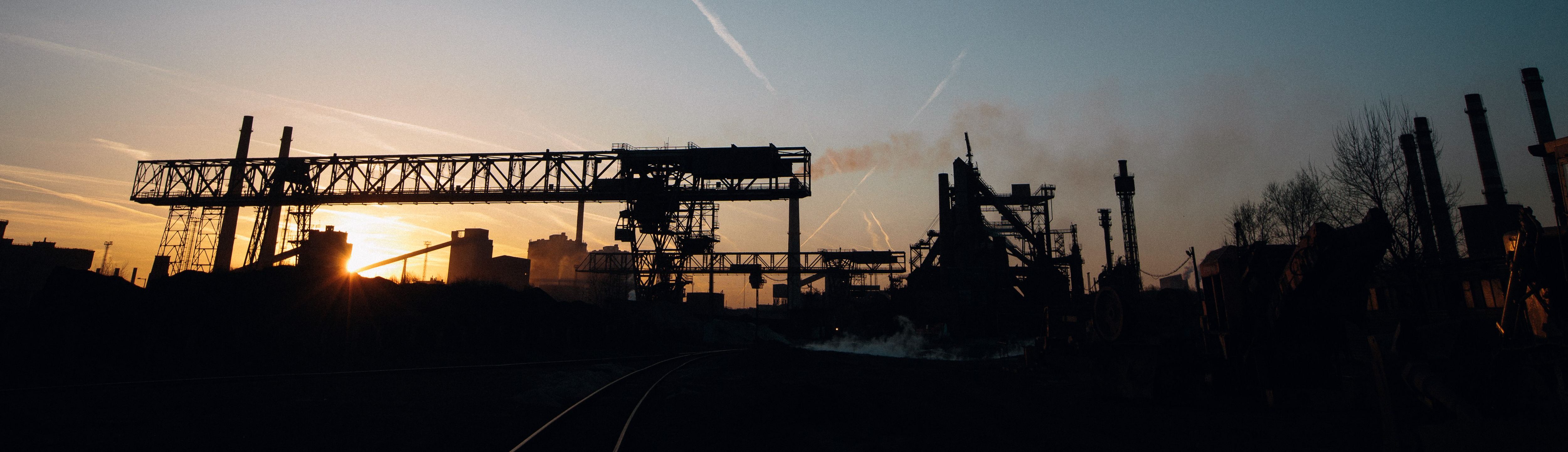
South Korea lacked sufficient domestic iron ore, had little available capital, possessed limited steelmaking expertise and initially had a domestic market too small to offer obvious economies of scale. International attempts to finance an integrated Korean steel mill repeatedly failed because outside investors questioned whether the project could become profitable. The Korean government proceeded anyway.
Pohang Iron and Steel Company—POSCO—was established in 1968. Government support helped mobilize financing and infrastructure, while capital associated with Korea’s normalization of relations with Japan helped make construction possible.
Production began at Pohang in 1973 but Korea’s important decision was not simply to build and protect a steel company. It simultaneously developed industries capable of using Korean steel.
Shipbuilding required enormous quantities of plate steel. Automobile production required steel, machinery and increasingly sophisticated components. Construction, industrial machinery and heavy manufacturing created additional domestic demand.
This produced something more important than an isolated protected industry: it created an industrial chain and the results were dramatic.
South Korean merchandise exports were only about $39 million in 1961. By 1975, their exports had reached approximately $5.1 billion, equivalent to roughly 30% of GDP. Manufactured goods rose from about 14% of merchandise exports in 1960 to 82% by 1975.
POSCO itself eventually became internationally competitive. By 1992 it had approximately 21 million tonnes of production capacity and had become the world’s third-largest steel producer. The important part of the Korean example was how protection was not the final objective; capability was.
South Korea protected and financed industries while simultaneously building the domestic relationships between them and, eventually, forcing much of that production to compete internationally.
Steel supported ships.Steel supported automobiles.Ships and automobiles created demand for machinery, electronics and components which increased the sophistication of the entire chain creating higher-value exports. Protection had become a bridge between an industry Korea did not possess and an industry capable of competing internationally.
Argentina: When Protection Becomes Permanent

Argentina provides the opposite lesson. Beginning particularly in the late 1950s, Argentina attempted to develop a domestic automobile industry through import-substitution industrialization.
Instead of importing finished automobiles, multinational manufacturers were encouraged to establish domestic production. Imported vehicles and components faced enormous barriers.
Research on the Argentine automotive sector estimates that effective protection for vehicle manufacturers exceeded 700% during parts of the early 1960s. At times, importing finished vehicles was prohibited altogether.
The strategy did create factories. International manufacturers established Argentine operations and domestic parts production expanded but there was a fundamental problem: protection reduced the pressure to become internationally competitive.
Argentina’s market was relatively small, yet numerous manufacturers produced many different models. Production volumes remained too low to achieve the economies of scale available to major international producers. The result was an industry capable of producing cars, but at comparatively high cost.
More importantly, the policy failed one of its own major objectives. Import substitution was supposed to reduce Argentina’s dependence on foreign currency by replacing imported finished vehicles with domestic production. Instead, manufacturers continued requiring imported machinery, materials and components.
A World Bank examination found that between 1959 and 1965 the foreign-exchange requirements of Argentina’s automotive industry increased almost fivefold. The World Bank described the result as self-defeating: the industry created through import substitution had itself become highly dependent on imported inputs.
Later the World Bank analysis similarly found that Argentine manufacturers had become heavily dependent on the protected domestic market and frequently lacked the scale necessary to compete internationally.
Argentina therefore succeeded in creating an automotive industry but it struggled to create an industry that no longer required extensive protection.That provides the central contrast. South Korea protected production while building toward competitiveness. Argentina allowed protection itself to become part of the industry’s business model.
The United States: Free Trade With Exceptions
The United States demonstrates a different form of protectionism. As the dominant economic power behind much of the post-war trading system, the United States spent decades advocating lower tariffs and greater international market access. It nevertheless continued protecting particular domestic industries.

Sugar offers a traditional example. American policy combines price supports, production controls and tariff-rate quotas that restrict the quantity of foreign sugar entering the country at lower tariff rates. The policy succeeds in maintaining domestic production but that success is expensive.
The U.S. Government Accountability Office found that higher domestic sugar prices generate an estimated $1.4 billion to $2.7 billion in additional annual benefits for producers. Consumers and sugar-using businesses, however, bear an estimated $2.5 billion to $3.5 billion in additional annual costs. Some estimates put the net economic cost at approximately $1 billion per year.
In 2022, American sugar users were paying roughly twice the world-market price. Sugar illustrates protection’s basic weakness. A government can successfully preserve an industry while making the wider economy less efficient but modern American protectionism increasingly shows another motivation: strategic supply chains.
Semiconductors are an obvious example. The United States has used direct public financing through the CHIPS program to encourage domestic fabrication and production of critical semiconductor input and the policy extends well beyond finished chips.
Federal support has targeted polysilicon, specialized glass, vacuum equipment, advanced packaging and fabrication facilities. Effectively the United States is targeting the interconnected components required for an American semiconductor production ecosystem.
In January 2026, the United States went further, imposing a 25% tariff on certain advanced computing chips where their importation was not contributing to the development of the American technology supply chain or domestic manufacturing capacity.
The distinction is significant. The objective is not merely to keep one semiconductor company operating. It is to ensure that the United States retains enough of the chain: including the materials, manufacturing equipment, fabrication, packaging, research and downstream production required to reduce dependence on foreign suppliers in a strategically important sector. This resembles the Korean model more closely than traditional agricultural protection.
What International Trade Rules Actually Allow
Protectionism does not occur outside the international system but that system is frequently misunderstood. The International Monetary Fund and World Bank emerged from the Bretton Woods framework and primarily concern monetary stability, development and finance.
The principal rules governing tariffs and international trade developed through the General Agreement on Tariffs and Trade and, since 1995, the World Trade Organization. Those rules encourage lower and more predictable trade barriers but they do not prohibit every form of protection.
WTO rules allow governments to use anti-dumping duties where imported products are being sold unfairly cheaply and injuring domestic producers. Countervailing measures can respond to certain foreign subsidies. Temporary safeguards may be used when sudden increases in imports cause or threaten serious injury to domestic industries.
The WTO rules specifically require such safeguards to be temporary and generally progressively liberalized while they remain in place. GATT Article XXI also contains exceptions connected to essential national-security interests, including military supply and emergencies in international relations.
There is therefore already recognition within the international system that completely unrestricted trade cannot address every national concern. The debate is about where protection is justified and how far it should extend.
A Different Trade Environment
The United States has again embraced tariffs as a major economic and strategic policy instrument. Canada among others is experiencing the consequences directly.
On August 22, 2026, the United States imposed tariffs of 50% on C$27.6 billion of Canadian goods. Canada has announced dollar-for-dollar countermeasures covering the same C$27.6 billion in U.S. imports. Tariffs of 15%, 25% and 50% are scheduled to take effect on September 8 across products including steel, dairy, appliances, agricultural equipment, electronics and pulp and paper.

This does not mean free trade is disappearing nor does it mean Canada should attempt to manufacture everything domestically. International trade remains enormously valuable but the assumption that essential goods will always move freely across borders at predictable prices has become less reliable.
That creates a stronger argument for examining which supply chains Canada cannot afford to lose and which ones it needs to build.
Protect a Problem-Solving Supply Chain
The Korean case suggests a different way to think about industrial policy. Instead of asking: which Canadian companies should the government protect? Canada could ask: which national problems require productive capabilities that Canada does not currently possess at sufficient scale?
Housing offers an obvious case. Canada does not simply have a shortage of inexpensive mortgages or homebuyer financing. It has a shortage of homes.
CMHC estimates that restoring affordability toward 2019 levels would require approximately 430,000 to 480,000 housing starts every year through 2035. Under its existing trajectory, Canada is projected to build only approximately 245,000 to 250,000 annually.
In other words, construction would need to approach roughly twice its expected pace. Canada cannot finance its way out of that physical constraint.
If substantially more buyers are given access to money while the number of homes, workers and construction materials remains limited, additional purchasing power simply competes for scarce supply.
The country needs greater productive capacity, housing is an industrial-policy problem as well as a housing-policy problem.
Build the Housing Chain
A house is the final product of a much larger system.
It requires: lumber/engineered wood, concrete, cement, steel, aluminum, glass for windows, insulation, electrical equipment, plumbing systems, heating and cooling equipment, roofing, finishing materials, transportation and skilled labour just to name a few key aspects.
The Korean lesson suggests that Canada should examine these elements together. Simply subsidizing homebuilders cannot solve a shortage if builders all compete for the same limited number of electricians, the same cement supply or the same manufactured components.
Increasing lumber production alone accomplishes little if another bottleneck simply moves further down the chain. The objective should be to increase the capacity of the housing-production system as a whole.
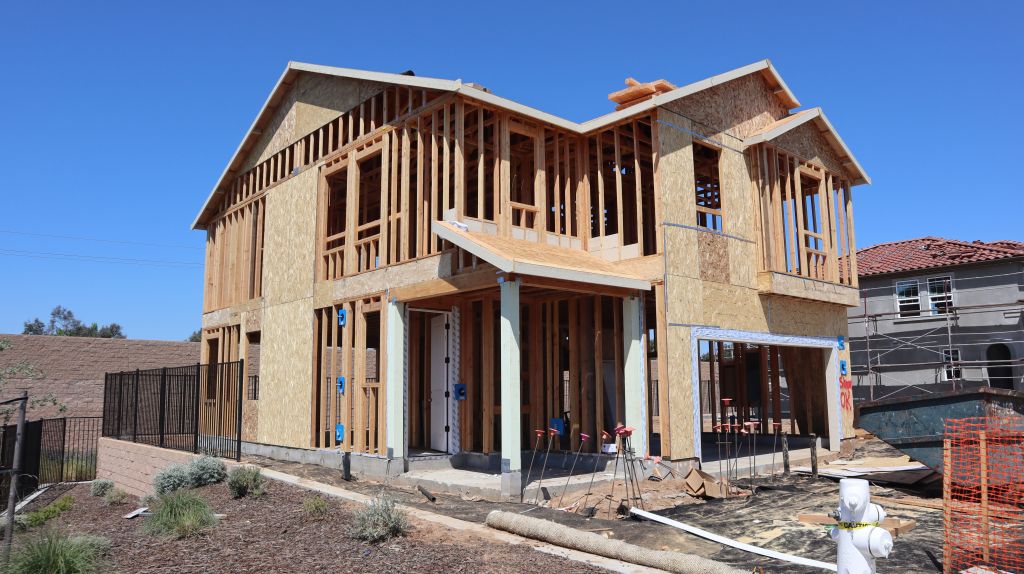
There are signs that Canadian housing policy is already beginning to move in this direction.
Build Canada Homes has explicitly identified modular, panelized and prefabricated construction as tools for increasing productivity, reducing costs and strengthening domestic supply chains. The federal government has also connected the program to Canadian lumber, steel, aluminum and mass-timber production through its Buy Canadian approach but these concepts can be developed much further.
Protection in Exchange for Capacity
Canada could identify the materials and production stages that most constrain housing construction. Where domestic capacity is inadequate but economically realistic to develop, governments could then use a combination of financing, procurement, tax incentives and carefully targeted trade measures to encourage expansion.
Long-term government purchasing agreements could give factories enough predictable demand to justify major capital investment. Public financing could support highly automated plants producing standardized wall panels, modular units, engineered timber or other building components. Training programs could be connected directly to projected shortages in construction trades and manufacturing.
Where foreign producers engage in dumping or subsidization that threatens a developing domestic industry, Canada already has trade-remedy mechanisms that can respond within international rules.
Public support should also carry obligations. A company receiving substantial government financing, preferential procurement or temporary protection should not simply receive higher profits. It should be expected to increase capacity, its productivity should improve, and its costs should be monitored.
Its Canadian production commitments should be measurable and where public assistance has been provided specifically to resolve a domestic shortage, agreements can require that a defined portion of the supported production remain available to the Canadian market before scarce capacity is directed elsewhere.
That is more precise than simply banning exports, the purpose is not economic isolation. It is ensuring that public money used to create productive capacity actually addresses the shortage that justified the investment.
Monitor the Price as Well as the Production
Argentina demonstrates why this condition matters. Protection can create scarcity just as easily as it can create capacity. If Canadian producers know foreign competition has been restricted and respond primarily by raising prices, protection has failed.
Industrial policy should therefore measure not only how many factories have opened but what happens to the cost of their products. If a protected building-material industry receives public support while its prices rise considerably faster than labour, energy and raw-material costs, the government should be able to investigate why.
Support could then be adjusted, additional competition encouraged or protection reduced. The objective should be to lower the real cost of producing additional housing through greater scale and productivity.
That also provides a better route to affordability than deliberately attempting to collapse the value of existing homes. Canada has millions of households whose homes represent their largest asset and retirement savings.
A housing strategy should therefore attempt to restore affordability primarily by increasing the quantity and lowering the production cost of new housing, allowing incomes and supply to gradually rebalance the market rather than relying on a sudden destruction of existing homeowner equity but that requires industrial capacity.
Protection Should Eventually Produce Competition
South Korea’s experience should provide the final test. A protected industry should become progressively stronger. If a Canadian modular-housing sector requires permanent extraordinary subsidies simply to survive, something has gone wrong.
If Canadian building materials remain dramatically more expensive than equivalent foreign products despite years of public support, something has gone wrong. If firms accept protection but do not expand capacity, something has gone wrong.
Successful protection should eventually make itself less necessary. That does not require Canada to become the world’s cheapest producer of every housing input. It requires the protected chain to become productive enough that normal domestic demand, not perpetual government intervention, is capable of sustaining it.
Exports can eventually become part of that success as well. South Korea did not build steel simply to consume all of it domestically forever. Its domestic industrial system reached sufficient scale and sophistication to compete internationally.
Canada could pursue the same sequence. Meet domestic need. Build scale. Improve productivity. Then compete outward.
What Should Canada Protect?
Protectionism is neither an economic solution nor an economic mistake by itself: it is a tool. The Korean experience demonstrates how the government can identify missing industrial capabilities, develop connected industries and eventually produce internationally competitive firms.
The American experience demonstrates that even one of the world’s strongest advocates of free trade protects supply chains when it believes their continued existence serves a strategic national interest.
Argentina demonstrates the danger of protecting production without demanding efficiency, scale or eventual competitiveness.
Taken together, these cases suggest a practical rule. Countries should not begin by asking which businesses deserve protection. They should begin with the problem they need to solve.

Canada’s housing shortage provides one such problem. The country needs hundreds of thousands more homes every year. Achieving that requires more than mortgage policy, zoning reform or assistance for individual buyers. Canada requires the physical ability to manufacture and assemble homes at substantially greater scale.
Canada should therefore map the housing supply chain, identify its most important bottlenecks, develop domestic capacity where doing so is economically realistic and use targeted protection where international competition threatens that development before it reaches scale.
Public support should come with domestic supply commitments. Prices and productivity should be monitored. Protection should decline as competitiveness improves and the strategy should extend across the chain rather than protecting isolated companies.
South Korea’s achievement was not simply POSCO, it was what South Korea built around POSCO. Steel supported shipbuilding, Steel supported automobiles. Those industries supported machinery and increasingly sophisticated manufacturing with each layer strengthened the others.
Canada should apply the same logic to the problems it faces now. For housing, that means connecting Canadian resources, building materials, advanced manufacturing, modular construction, skilled trades and large-scale homebuilding into a deliberate production strategy.
The objective is not to withdraw from international trade, it is to ensure that when Canada has an essential domestic need, it also possesses enough of the productive chain required to meet it.
The stronger case for modern protectionism is Do not protect an industry simply because it exists rather build and protect the supply chains needed to solve problems the country cannot afford to leave unresolved.
 Political Solutions
Leave a comment